

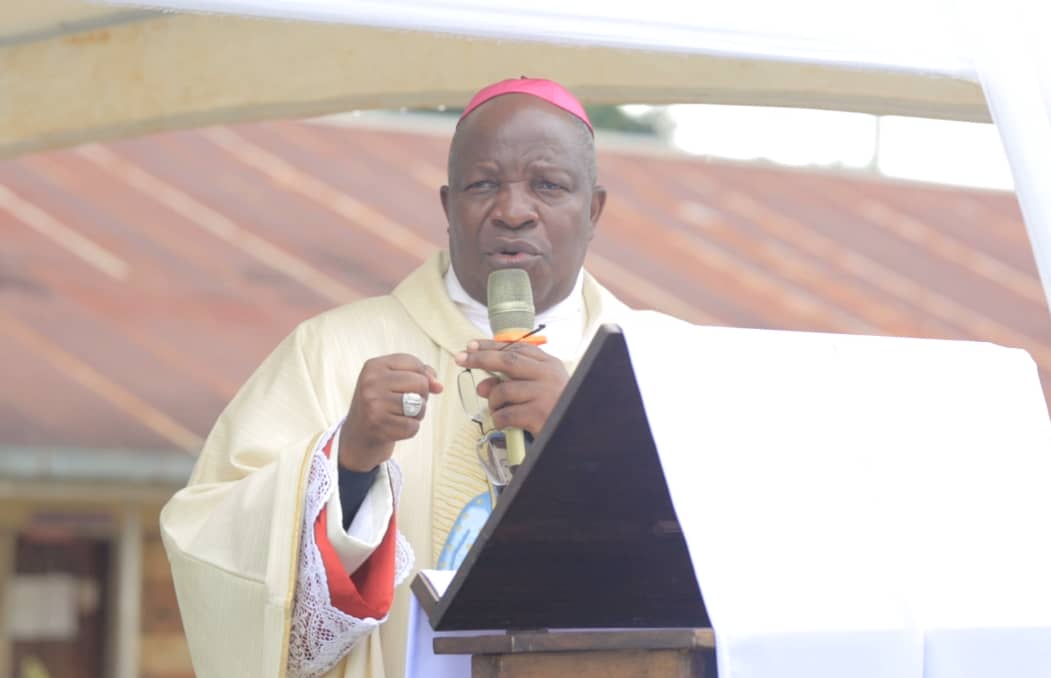
The Bishop of Masaka Catholic Diocese, Rt Rev Serverus Jjumba, has challenged parents who still look down upon vocational education, describing such attitudes as outdated and detrimental to efforts aimed at equipping young people with practical skills for employment and self-reliance.
Bishop Jjumba made the remarks while presiding over a thanksgiving Mass and graduation ceremony at Bishop Stensera Vocational Training Institute, where 140 students graduated after completing various vocational courses.
The graduates received certificates in a range of disciplines, including tailoring, catering and hotel management, hairdressing and beauty therapy, computer studies, motor vehicle mechanics, and other technical fields.
Addressing parents, students and invited guests, Bishop Jjumba expressed concern that many Ugandans still view vocational education as an option for students who have failed in the formal academic system.
“It is unfortunate that some parents continue to believe that vocational education is for those who have failed academically. This perception is wrong. The truth is that vocational skills are among the most important tools for survival and development in today's world,” Bishop Jjumba said.
He noted that skilled workers are increasingly needed across all sectors of society and urged parents to encourage their children to pursue practical training without stigma.
“The country's economy depends heavily on people with practical skills. We need electricians, mechanics, carpenters, tailors, builders and computer technicians. These are the people who keep society moving every day,” he added.
The bishop also called upon school administrators and instructors to place greater emphasis on practical learning rather than relying excessively on classroom theory.
“Learners should be given opportunities to practise what they study. Technical education is most effective when students can see, touch and apply the knowledge they acquire instead of spending all their time listening to theory in classrooms,” he said.
The chief guest, Owek. Dr. George William Kasumba, a member of the Buganda Kingdom's governing council, advised the graduates to uphold integrity, honesty and discipline as they begin their careers.
He said integrity remains one of the most valuable assets in both employment and business and urged the graduates to become role models within their communities.
“Skills alone are not enough. Success also depends on character. Be truthful, work hard and avoid corruption and dishonest practices that continue to damage our society,” Dr. Kasumba said.
Also speaking at the ceremony, Owek. Gertrude Ssebuggwawo Nakalanzi, the Buganda Kingdom chief for Kooki County, warned young women to remain vigilant against HIV/Aids, noting that the disease continues to pose a serious public health challenge.
“The fight against HIV/Aids is not over. Young people, especially girls, must make responsible decisions and protect themselves from infection,” she said.
Joseph Ssewava Mukasa, the Presidential Special Advisor on Buganda Affairs, commended religious institutions for complementing government efforts in promoting vocational training and skills development.
“Vocational institutions are playing a vital role in addressing youth unemployment. By equipping young people with practical skills, they are helping create self-reliance and reducing dependence on scarce white-collar jobs,” Mukasa said.
However, the chairperson of the school's governing council, Francis Ssemujju, highlighted several challenges facing the institution, particularly unreliable electricity supply.
He explained that frequent power outages continue to disrupt practical lessons and affect the quality of training offered to students.
“Electricity is essential for many of the courses taught here. The constant power interruptions make it difficult for students to acquire the hands-on experience they need. We appeal to well-wishers and development partners to support us in overcoming this challenge,” Ssemujju said.
The head of the institution, Sister Rev. Susan Nayiga, congratulated the graduates and encouraged them to use the skills they had acquired to transform their lives and contribute to national development.
She urged them to remain disciplined, innovative and committed to excellence as they enter the job market or establish their own businesses.
The ceremony concluded with the awarding of certificates to the 140 graduates, followed by celebrations by parents, guardians and well-wishers who applauded the institution's contribution to skills development and youth empowerment in the region.
